
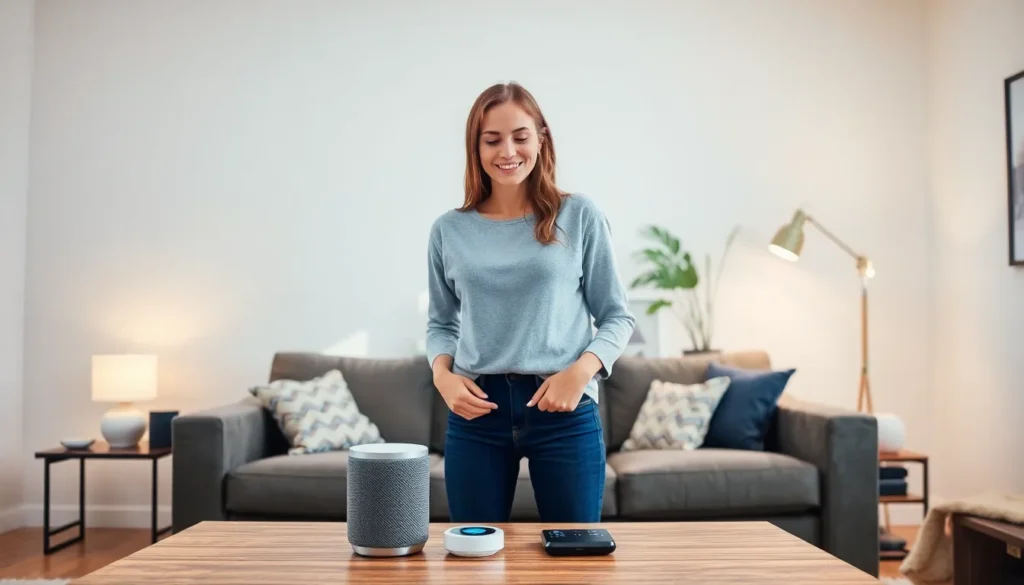
In a world where talking to your gadgets feels like a scene from a sci-fi movie, voice command devices have become the ultimate sidekicks for the tech-savvy. Imagine effortlessly controlling your home with just a few words—no more fumbling for switches or remote controls. It’s like having a personal assistant who never takes a coffee break and always listens, even when you’re in your pajamas.
From turning up the music to adjusting the thermostat, these devices are designed to make life smoother and a bit more fun. They might not bring you breakfast in bed, but they’ll happily remind you to grab that cup of joe. With voice command devices, the future isn’t just coming; it’s already here, and it’s ready to take your home into the next dimension of convenience.
Overview of Voice Command Devices
Voice command devices serve as integral components of modern smart homes. These devices utilize advanced artificial intelligence, enabling seamless interaction with various systems and appliances. Users can control lights, thermostats, and security systems simply through verbal commands, enhancing accessibility for everyone.
Many popular products dominate the market, such as Amazon Echo, Google Nest Hub, and Apple HomePod. Each device offers unique features and functions, catering to different preferences and needs. For instance, Amazon Echo excels in providing integrated services through Alexa, allowing for task management and shopping directly via voice.
Compatibility stands as a significant factor when choosing a voice command device. Numerous devices work with third-party applications, facilitating integration with a wider range of smart home products. This interoperability ensures users benefit from a more connected and automated environment.
Privacy concerns also arise with the use of voice command technology. Users must consider data security as these devices continually listen for wake words, potentially recording conversations. Ensuring proper settings and updates helps mitigate risks associated with personal information.
Voice command devices contribute to an evolving digital landscape. They enhance productivity and convenience, reflecting the shifting dynamics of home automation. As technology progresses, further developments in voice recognition and natural language processing are expected, promising even more functionality and ease of use in the future.
Types of Voice Command Devices
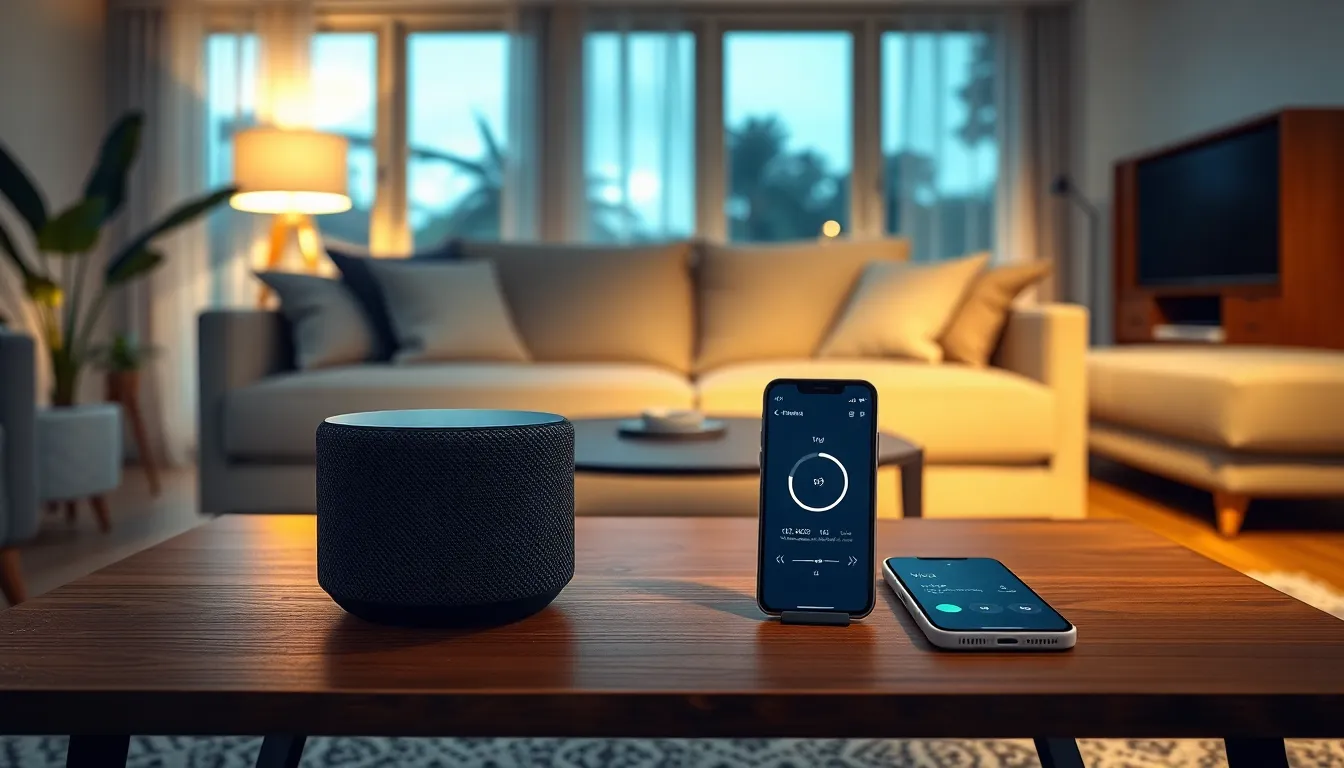
Voice command devices come in various forms, each serving specific functions and user needs. These gadgets enhance automation and seamless interaction in modern living spaces.
Smart Speakers
Smart speakers represent a popular category of voice command devices. Brands like Amazon Echo and Google Nest offer advanced audio quality and hands-free control of home automation systems. Users can play music, set reminders, or access information with simple voice commands. These devices often support various streaming services, allowing users to enjoy their favorite content effortlessly. Integration with smart home devices enables users to manage lighting, thermostats, and security systems through voice activation.
Voice Assistants on Mobile Devices
Voice assistants on mobile devices provide convenience and accessibility. Features like Apple’s Siri and Google Assistant allow users to perform tasks directly from their smartphones. They can send messages, make calls, and navigate using voice input. Mobile voice assistants adapt to individual user preferences, learning from past interactions to enhance their responses. Compatibility with various apps extends functionality beyond standard phone features, making everyday activities more efficient.
Key Features of Voice Command Devices
Voice command devices boast several features that enhance user experience and convenience. They rely heavily on advanced technology for effective operation.
Voice Recognition Technology
Voice recognition technology empowers devices to understand and process spoken commands. This feature improves user engagement by allowing for natural interaction without physical buttons. Enhanced algorithms continuously learn from user interactions, leading to better accuracy and responsiveness over time. Studies show that the latest systems can achieve recognition accuracy above 95%, making them suitable for various environments. Multiple languages are supported, enabling a broader user base. Overall, voice recognition significantly streamlines communication with smart devices.
Integration with Smart Home Systems
Integration with smart home systems is a crucial feature of voice command devices. These devices often serve as a central hub, allowing control of multiple appliances simultaneously. Users can manage lights, thermostats, and security systems through simple voice commands, thus enhancing home automation. Compatibility with popular platforms like SmartThings and Apple HomeKit further increases flexibility. Many devices support routine settings for automated tasks, like adjusting lighting based on time of day. This seamless integration fosters a connected environment that enhances convenience and energy efficiency.
Benefits of Using Voice Command Devices
Voice command devices enhance convenience in everyday tasks. Users can control smart home systems effortlessly, performing actions like adjusting lighting or changing thermostat settings with simple voice commands. Increased efficiency comes from the ability to multitask; users can focus on other chores while managing devices.
Time savings represent a significant advantage of these devices. Setting reminders, adding items to shopping lists, or scheduling events comes easily, allowing users to streamline daily routines. Enhanced accessibility makes voice command devices ideal for individuals with mobility challenges, reducing barriers to controlling home environments.
Moreover, voice recognition technology keeps improving. Accurate response rates exceed 95%, making interactions smoother. Multilingual support broadens usability, accommodating a diverse user base across different regions.
Advanced integration with third-party applications broadens functionality. Users can customize their experiences, selecting compatible apps that fit their unique lifestyles. Whether ordering groceries or checking the weather, voice command devices simplify interactions with technology.
Data security plays a crucial role in acceptance. Recognizing potential privacy concerns, manufacturers invest in robust security measures to ensure user data remains confidential. Users often appreciate transparency in how data is utilized, fostering trust.
Finally, continual advancements in artificial intelligence promise further enhancements. Future updates may introduce more natural language processing capabilities, allowing for even deeper conversational interaction. As technology evolves, the role of voice command devices in everyday life continues to expand, further enriching user experiences.
Challenges and Limitations
Voice command devices present several challenges that users should consider. One significant limitation involves privacy concerns. Continuous listening for wake words raises questions about data security, prompting users to remain vigilant about their personal information.
User accuracy can also be an issue. Even with advanced algorithms, these devices may struggle with accents, dialects, or background noise. Users might experience frustration when their commands aren’t recognized correctly. Compatibility, although vital, isn’t universal. Different brands and ecosystems may lead to integration challenges, hindering smooth user experiences.
Network connectivity plays a crucial role in device functionality. Devices often rely on stable internet connections to process commands effectively. Unreliable connections can interrupt interactions, making it difficult to control smart home systems seamlessly. Sometimes updates or changes in software can reduce device responsiveness, leading to user dissatisfaction.
Dependence on voice alone poses its challenges. In environments with multiple speakers or noisy conditions, devices may misinterpret commands. Voice fatigue can also set in, causing users to feel strained when engaging with devices for prolonged periods.
Recognizing these limitations is essential for potential users when choosing voice command devices. Certain features may suit specific needs better, while others may fall short. Addressing these challenges ensures a more informed decision-making process, allowing users to enjoy the benefits without overlooking the potential drawbacks.
Voice command devices are transforming the way individuals interact with their homes. As these technologies continue to evolve they promise even greater convenience and functionality. Users can expect enhanced integration with smart home systems and improved voice recognition capabilities.
While challenges like privacy concerns and compatibility issues exist they shouldn’t overshadow the significant benefits these devices offer. For those seeking to simplify their daily routines and embrace a more connected lifestyle voice command devices represent a compelling choice. As advancements in artificial intelligence progress the future of home automation looks bright and full of possibilities.


