
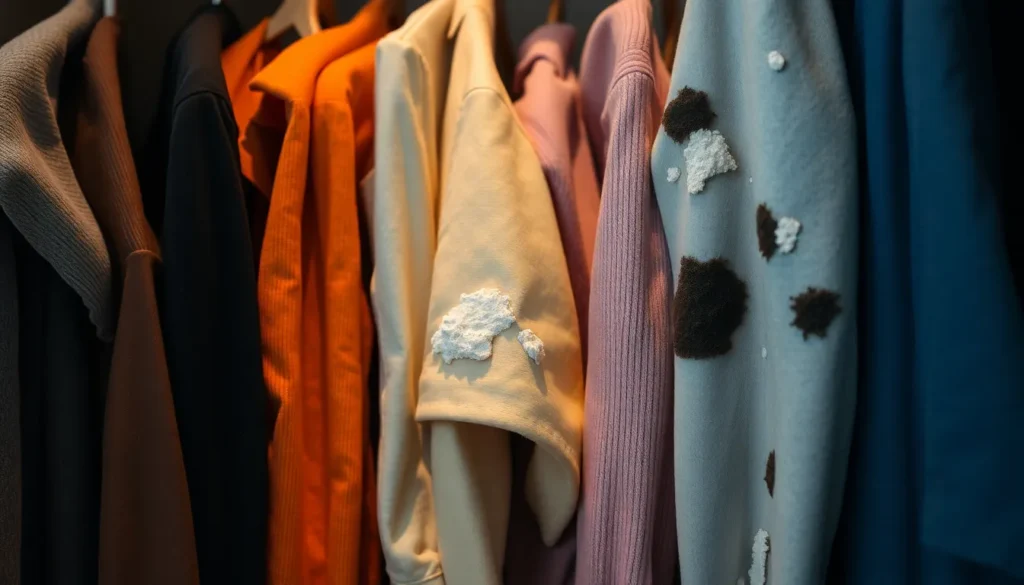
Picture this: you open your closet, and a funky smell hits you like a ton of bricks. You spot your favorite shirt, but wait—is that mildew or mold? While both might seem like unwelcome guests at your laundry party, they’re not quite the same. Understanding the difference can save your wardrobe and maybe even your nose.
Mildew tends to be the less aggressive cousin of mold, often showing up as a powdery, white film. Mold, on the other hand, is the party crasher that takes over with a dark, fuzzy appearance. Knowing how to identify and tackle these pesky fungi not only keeps your clothes fresh but also ensures you don’t accidentally wear a science experiment. So let’s dive into the world of mildew and mold, and reclaim your closet from these unwelcome intruders.
Understanding Mildew and Mold
Mildew and mold are two types of fungi that can affect clothing. Recognizing their differences plays a crucial role in effective treatment and prevention.
What Is Mildew?
Mildew is a specific type of fungus characterized by a powdery, white film. Typically found in damp, humid environments, it thrives on organic materials like cotton and linen. Mildew tends to emit a musty odor, signaling its presence. While it can cause cosmetic damage to clothes, its effects are generally less harmful than those of mold. Removing mildew from fabric requires targeted cleaning methods, often limited to soaking and using appropriate detergents.
What Is Mold?
Mold presents a darker, fuzzier appearance compared to mildew. It appears in various colors, including black, green, or brown, and often indicates advanced decay. Mold grows more aggressively than mildew, causing significant damage to fabrics and potentially leading to health concerns. This type of fungus thrives in moist environments, needing proper ventilation and drying to prevent its spread. Cleaning mold from clothing is essential, as it can stain and deteriorate the material if left untreated.
Causes of Mildew and Mold on Clothes
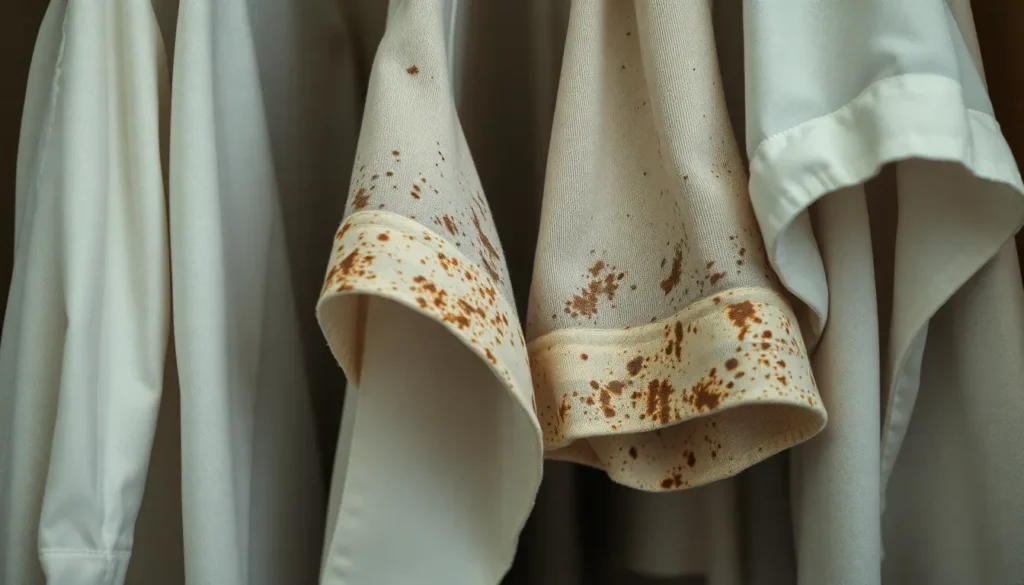
Mildew and mold on clothes often arise from a combination of environmental factors and material vulnerabilities. Understanding these causes is essential for effective prevention.
Environmental Factors
Warmth and moisture create ideal conditions for mildew and mold growth. Humidity levels above 60% significantly increase the risk of these fungi. Storing clothes in dark, poorly ventilated areas can also promote growth. Lack of air circulation exacerbates humidity issues, leading to a higher likelihood of mildew or mold infestation. Regularly checking and maintaining humidity levels can help in protecting clothes from damage.
Material Vulnerability
Certain fabrics are more susceptible to mildew and mold. Natural fibers, like cotton and linen, hold moisture effectively which makes them prime targets. Synthetic materials, while more resistant, aren’t immune. Clothes left damp for extended periods are at greater risk, regardless of the fabric type. Choosing appropriate storage methods can mitigate risks associated with fabric vulnerabilities. Regular cleaning of clothing items also enhances their resilience against fungal intrusion.
Identifying Mildew vs Mold on Clothes
Identifying mildew and mold on clothes involves observing distinct characteristics. Mildew often appears as a powdery white film, while mold shows as dark spots or fuzzy growth. Knowing these visual differences aids in quick identification.
Visual Differences
Mildew presents as a flat, powdery white or light gray film on fabrics. It often occurs in patches and lacks depth. Mold differs significantly; it grows in various colors such as green, black, or brown and exhibits a fuzzy, raised texture. Mold may spread unevenly, affecting larger areas of the fabric. Spotting these features early helps distinguish between the two fungi, enabling appropriate intervention.
Odor and Texture Differences
Mildew emits a musty smell that signals dampness without being overpowering. This scent typically lingers lightly on affected items. Mold, by contrast, carries a stronger, more pungent odor indicative of degradation. Additionally, mildew often feels dry to the touch while mold appears slimy or fuzzy. Recognizing these sensory cues assists in determining the nature of the infestation on clothing.
Prevention Tips for Mildew and Mold
Mildew and mold thrive in damp environments, making prevention essential for maintaining clothing integrity.
Storage Solutions
Store clothing in breathable containers to reduce moisture buildup. Avoid plastic bins, as they trap humidity, promoting fungal growth. Choose well-ventilated areas with low humidity levels, ideally below 60%. Elevating clothing off the ground can prevent contact with damp surfaces. Use silica gel packets or dehumidifiers to absorb excess moisture in storage spaces. Regularly check stored items for signs of mildew or mold. Rotate clothing to ensure air circulation around all pieces and limit stagnant conditions.
Washing Practices
Wash clothes regularly to remove moisture and prevent fungal growth. Using hot water settings can effectively kill mold spores on fabrics, particularly for resilient materials. Adding vinegar or baking soda during the wash can enhance cleaning power and eliminate odors. Always dry clothes completely before folding or storing them. Avoid leaving damp clothes in the washer for extended periods, as this fosters mildew growth. When possible, air-dry clothes in well-ventilated spaces under sunlight to discourage mold formation.
Treatment Methods for Affected Clothes
Addressing mildew and mold on clothing requires specific techniques. Home remedies often provide an effective solution for minor infestations.
Home Remedies
Vinegar serves as a natural cleaner, effectively tackling mildew and mold. Mixing one cup of white vinegar with water creates a solution that removes fungal stains. Using a soft brush, scrub the affected area diligently until clean. Baking soda also works wonders. Sprinkling it directly onto the stains and letting it sit for a few hours absorbs odors and lifts discoloration. Afterwards, simply wash the item in hot water with a detergent that contains bleach. For delicate fabrics, consider using a diluted hydrogen peroxide solution. Rinsing thoroughly prevents residue build-up.
Professional Cleaning
When home treatments fall short, consulting a professional dry cleaner can save valuable clothing. Experts utilize industrial-grade solutions tailored for rigorous mold removal. Employing specialized equipment ensures thorough cleaning and adequate drying, minimizing the risk of future growth. Be sure to communicate the specific issue when seeking help; this allows cleaners to apply the right techniques. In severe cases, they may recommend replacing heavily infested items to prevent contamination of other garments.
Addressing mildew and mold on clothes is essential for maintaining a healthy wardrobe. Recognizing the differences between these fungi helps in taking appropriate action. By implementing preventive measures and proper storage techniques, individuals can significantly reduce the risk of fungal growth. Regular cleaning and thorough drying of clothing items are crucial steps in preserving fabric integrity. When faced with infestations, timely intervention using effective home remedies or professional cleaning services can restore garments and prevent further damage. Staying vigilant and proactive ensures a fresh and safe clothing collection, free from the nuisances of mildew and mold.


