
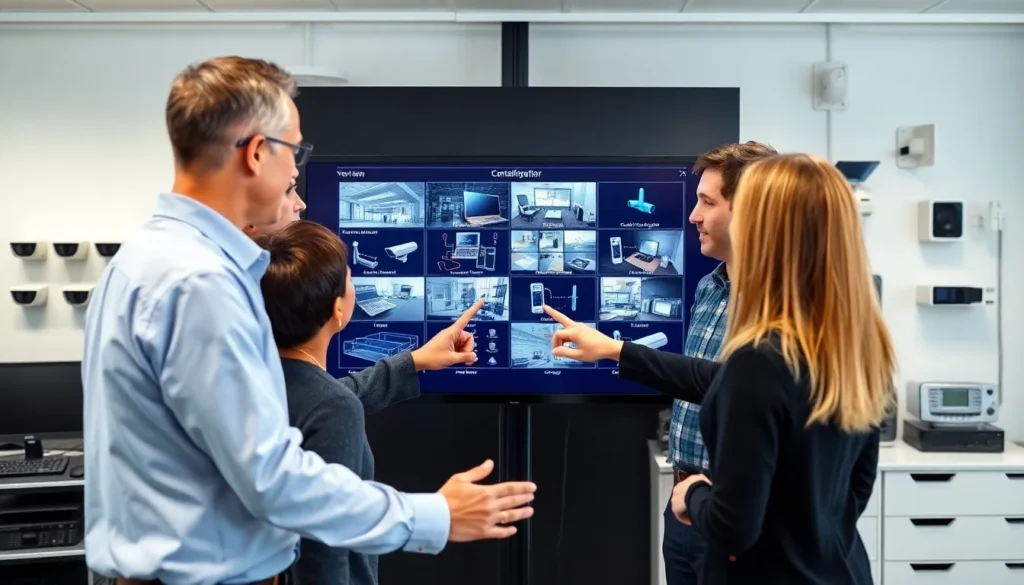
In a world where security threats lurk around every corner, integrating a robust security system isn’t just smart—it’s essential. Imagine a seamless fortress where cameras, alarms, and access controls work together like a well-rehearsed dance troupe. No more awkward miscommunications or missed alerts; just a smooth operation that keeps your property safe and sound.
Overview of Security System Integration
Security system integration encompasses the coordination of various security components to enhance overall safety. This coordination includes elements like surveillance cameras, alarm systems, and access control measures. When combined, these components work seamlessly to respond to security threats efficiently.
Effective integration allows for centralized management. Users can monitor real-time data from multiple sources on a single interface. This unified approach eliminates the confusion often associated with managing disparate systems. It streamlines operations by reducing the time needed to respond to incidents.
Improved communication between devices increases reliability. When an alarm activates, linked cameras can automatically start recording the area, providing valuable evidence. Access control systems can also restrict entry during specific threats, enhancing safety measures.
With the rise of IoT technology, integration becomes even more crucial. Connected devices allow for remote monitoring and automation, ensuring security teams can respond promptly. These advancements create a more proactive security environment, addressing potential risks before they escalate.
Organizations must prioritize the selection of interoperable systems. Ensuring compatibility among various devices leads to a smoother integration process. Consulting with professionals can lead to customized solutions tailored to specific security needs, maximizing the effectiveness of integrated systems.
Security system integration significantly improves the ability to protect properties against evolving threats. A well-coordinated system not only enhances operational efficiency but also ensures a higher level of safety and response readiness.
Benefits of Security System Integration

Security system integration provides numerous advantages that enhance safety and streamline operations. Effective integration ensures that all components work together seamlessly.
Enhanced Efficiency
Enhanced efficiency stands as a primary benefit of security system integration. Users experience significant improvements in monitoring capabilities when cameras, alarms, and access controls collaborate. Streamlined operations result in quicker response times during incidents. Real-time data availability allows security personnel to make informed decisions promptly. Linked devices also communicate automatically, saving time and ensuring reliable actions in critical moments. Centralized management simplifies oversight, offering a single platform for users to access information easily. Overall, this integrated approach maximizes the effectiveness of security measures.
Cost-Effective Solutions
Cost-effective solutions emerge as another vital aspect of security system integration. Investing in an integrated system reduces the need for multiple standalone devices and various software solutions. Organizations save on installation and maintenance costs with a unified infrastructure. Furthermore, operational efficiency leads to reduced resource expenditures over time. Integrated systems can scale according to specific needs, allowing organizations to adapt without significant future investments. By concentrating on interoperability and customization, businesses can ensure a more economical approach to security needs, maximizing their return on investment. This strategic focus enhances financial sustainability while providing robust protection.
Key Components of Security Systems
Security systems comprise various essential components that work together to ensure safety. Key elements include access control systems and surveillance and monitoring technologies.
Access Control Systems
Access control systems determine who can enter specific areas at any time. These systems utilize key cards, biometrics, or PIN codes for identification. Organizations enhance security by integrating these systems with alarms or surveillance cameras. The central management feature allows users to monitor access logs and respond to unauthorized attempts effectively. Moreover, real-time notifications alert security personnel to any suspicious activities, enhancing overall response efficiency.
Surveillance and Monitoring
Surveillance and monitoring technologies are vital for maintaining security in real-time. High-resolution cameras capture clear images, enabling thorough monitoring of premises. Integration with alarm systems enables cameras to automatically start recording upon an alarm trigger. This combination facilitates quick incident response, leading to increased safety. Additionally, remote access features allow security teams to view footage anytime, anywhere, improving oversight and incident management. Using motion detection and analytics, these systems can identify irregular activities, providing proactive surveillance measures.
Challenges in Security System Integration
Security system integration presents various challenges that organizations must address for effective implementation.
Technical Challenges
Technical obstacles frequently arise during integration projects. Different devices often use incompatible protocols, causing difficulties in communication between systems. Complex installations may require specialized expertise, leading to additional costs and time delays. Data management issues can also occur, as disparate systems may generate large volumes of information. Managing these is crucial for extracting meaningful insights and improving security responses. Additionally, ensuring network security against cyber threats remains a constant concern. Organizations must prioritize robust cybersecurity measures to protect integrated systems from potential breaches.
Human Factors
Human factors significantly impact the success of security system integration. Employee training stands out as a crucial element, as staff must understand how to operate new systems effectively. Resistance to change often emerges, creating hurdles that hinder adoption. Communication gaps can lead to misunderstanding technology capabilities, resulting in suboptimal use of integrated systems. Furthermore, organizational culture plays a role in embracing innovation; fostering a proactive security mindset enhances integration outcomes. Stakeholder involvement during the planning phase ensures that user needs are accounted for, reducing resistance and improving overall effectiveness.
Future Trends in Security System Integration
Emerging trends in security system integration focus on incorporating innovative technologies to enhance safety and operational efficiency. Adapting to these changes ensures organizations maintain a competitive edge in security management.
AI and Machine Learning
AI and machine learning play vital roles in modern security systems. These technologies analyze vast amounts of data from various sources, identifying patterns and anomalies that may indicate a security breach. Predictive analytics enable proactive threat detection, allowing organizations to address potential risks before escalation. Automated decision-making processes can deter intrusions by triggering alerts or initiating responses based on real-time information. Integrating AI enhances the effectiveness of existing systems, ensuring responses become progressively more efficient. As organizations increasingly embrace these technologies, they can achieve better situational awareness and improve overall security posture.
Cloud-Based Solutions
Cloud-based solutions transform how organizations manage security systems. These platforms offer scalable, centralized access to security data from any location, facilitating remote monitoring and control. Cost-effectiveness emerges from reduced need for physical infrastructure, leading to savings on maintenance expenses. Enhanced collaboration among teams occurs when security data is shared seamlessly through the cloud, ensuring faster response times. Security updates and patches can be deployed automatically, reinforcing system reliability. By utilizing cloud-based solutions, organizations gain flexibility, efficiency, and improved response capabilities in their security management practices.
Security system integration stands as a crucial strategy for organizations aiming to enhance their safety measures. By unifying various components like cameras and alarms, businesses can streamline operations and respond more effectively to potential threats.
Adopting IoT technology and innovative solutions allows for real-time monitoring and automation, further strengthening security efforts. As organizations face evolving challenges, prioritizing interoperable systems and professional guidance becomes essential for maximizing the effectiveness of their security infrastructure.
Embracing these integrated approaches not only boosts operational efficiency but also leads to significant cost savings, ensuring a robust and sustainable security framework for the future.


