
In a world where even your toaster can have a personality, smart home controllers are the ultimate sidekicks for tech-savvy homeowners. Imagine strutting into your living room and commanding your lights to dim, your thermostat to cozy up, and your coffee maker to brew—all with a single command. It’s like having a personal assistant who never asks for a raise.
Overview of Smart Home Controllers
Smart home controllers serve as central hubs that manage and coordinate various devices within a household. These devices include smart lights, security cameras, thermostats, and home entertainment systems. Users can easily integrate multiple brands and functionalities into a single platform, streamlining control methods.
The advantages of using smart home controllers include increased convenience and enhanced efficiency. Homeowners can adjust settings, monitor energy usage, and receive alerts from their devices, all through a smartphone application or voice command. Many systems support automation, allowing users to schedule operations or trigger actions based on specific conditions, like time or occupancy.
Compatibility remains a key feature when selecting smart home controllers. Some controllers support broader ecosystems, while others may restrict users to specific brands. Research indicates that platforms compatible with multiple devices typically offer increased usability.
Voice assistant integration is another essential aspect. The ability to synchronize with popular voice-enabled technologies, such as Amazon Alexa or Google Assistant, enhances user experience. It simplifies command execution, ensuring that programming and control require minimal effort.
Installation processes generally vary based on the system chosen. Some require professional installation while others offer user-friendly setups for tech-savvy individuals. Detailed user guides and online tutorials can aid in setting up and configuring devices.
Current trends show a growing preference for smart home controllers that emphasize security features. Enhanced privacy controls and secure communication protocols help protect homeowners from unauthorized access. Investing in reputable brands allows users to leverage the latest technology while ensuring their privacy and safety remain intact.
Types of Smart Home Controllers
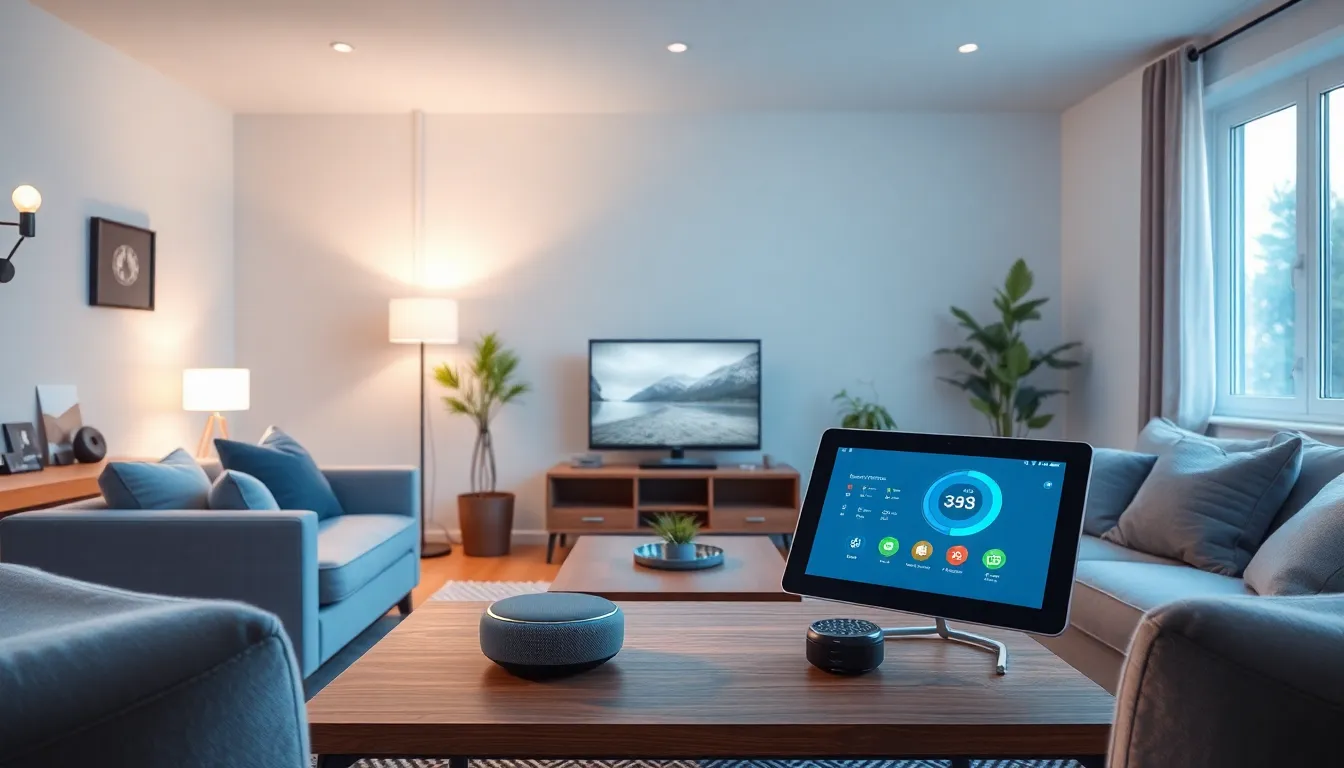
Smart home controllers come in various types, each offering unique functionalities for users. Understanding these types aids in selecting the right controller for a smart home system.
Hub-Based Controllers
Hub-based controllers centralize control of numerous smart devices within a network. They serve as a command center for different brands, allowing seamless interaction among devices like lights, locks, and thermostats. Users can usually manage these devices through a dedicated app or web interface. Many hub-based controllers support automation features, enabling scheduled operations and responsive actions based on environmental triggers. The ability to integrate diverse gadgets into one ecosystem enhances convenience and reduces reliance on multiple apps. Examples of popular hub-based controllers include Samsung SmartThings and Apple HomeKit.
Voice-Activated Controllers
Voice-activated controllers offer hands-free operation for smart home devices. Users issue verbal commands through integrated voice assistants like Amazon Alexa or Google Assistant. This type of controller supports tasks such as adjusting lighting, controlling thermostat settings, or playing music with simple spoken phrases. Integration with various compatible devices enhances functionality and improves user experience. Many voice-activated systems also allow for service routines, enabling multiple actions with a single command. Examples include the Echo Dot and Google Home. These controllers demonstrate how intuitive smart home technology can simplify everyday tasks.
Features to Look for in Smart Home Controllers
Smart home controllers come with various features that enhance functionality and user experience. Prioritizing these features helps users find the perfect fit for their needs.
Compatibility with Devices
Compatibility with devices ranks high among essential features. A wide range of supported devices provides users with greater flexibility. Controllers that sync with multiple brands ensure seamless connectivity between smart devices. Checking compatibility before purchasing offers peace of mind. Many homeowners find platforms like Samsung SmartThings or Apple HomeKit beneficial due to their extensive ecosystem support. Choosing a controller that integrates well with existing gadgets enhances usability.
User Interface and Ease of Use
User interface and ease of use are crucial for ensuring a satisfying experience. An intuitive layout allows for quick access to various smart home functions. Complex configurations can be frustrating for some users. Simplified setups enable household members to control devices easily, even without technical knowledge. Many controllers offer smartphone apps that streamline navigation, making smart controls accessible for everyone. Selecting a controller with a user-friendly interface contributes to a smoother smart home experience.
Top Smart Home Controllers in 2023
Several smart home controllers dominate the market this year, offering unique features and enhanced user experiences.
Product Reviews and Comparisons
Samsung SmartThings stands out due to its compatibility with numerous smart devices, allowing seamless integration across brands. Apple HomeKit appeals to users seeking privacy, providing secure communication for a more protected smart home environment. Google Nest Hub simplifies control of multiple devices through its voice-activated functionality, making tasks easy to manage. Amazon Echo Dot excels in voice command execution, enabling hands-free operation that enhances convenience. Each product presents distinct benefits that cater to various user preferences, illustrating the importance of evaluating specific needs before making a decision.
Pricing and Value for Money
Prices for smart home controllers range dramatically based on features and capabilities. Samsung SmartThings typically starts around $70, while Apple HomeKit’s entry-level options may be higher, reflecting its premium ecosystem. Google Nest Hub can be obtained for roughly $100, offering a valuable touch screen experience. Amazon Echo Dot, priced around $50, remains an affordable entry point for voice-activated control. Assessing the potential savings from energy monitoring and automation features helps determine overall value, making these investments beneficial for long-term convenience and efficiency.
Smart home controllers are transforming how homeowners interact with their living spaces. By centralizing control of various devices they provide unparalleled convenience and efficiency. As technology advances these controllers continue to evolve offering enhanced features and improved compatibility with a range of devices.
Choosing the right smart home controller is essential for maximizing the benefits of a connected home. With options like Samsung SmartThings and Apple HomeKit users can find systems that align with their needs and preferences. Investing in a reliable and user-friendly controller not only simplifies daily tasks but also enhances the overall smart home experience.


